on the evening of that day, the first day of the week, Jesus showed himself to his apostles. He breathed on them, and said to them: ‘Receive the Holy Spirit. If you forgive the sins of any, they are forgiven; if you retain the sins of any, they are retained’ (John 20:19, 22-23)
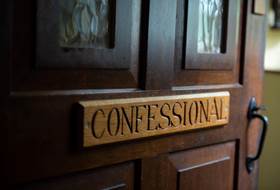
Reconciliation (officially called the Sacrament of Penance and Reconciliation or Confession) is the Sacrament in which we receive forgiveness from Christ. We repent and confess our sins, and are absolved of sin through the ministry of a priest, who acts in the person of Christ when he pronounces the words ‘I absolve you from your sins in the name of Father and of the Son and of the Holy Spirit’.
Sin damages our relationship with God, with the Church and with each other. Confession is important because it is the normal way we can be forgiven for serious sins committed after Baptism. It is this Sacrament that reconciles us once again with God. At the same time, we are reconciled with the Church because it is also wounded by our sins.
The Church Fathers (a popular title for early Christians whose personal holiness and doctrine won general approval in the Church) described the Sacrament of Reconciliation as the ‘second plank’ we can count on when we get shipwrecked by sin and the loss of grace (CCC 1446), the first being Baptism.
Regular confession is important because it helps us to come close to Christ and develop a mature conscience. The act of confessing itself bestows healing and a sense of release from the burden of sin. The Sacrament helps us stay close to the truth that we cannot live without God: ‘In him we live and move and have our being’ (Acts 17:28).
Not only does the Sacrament of Reconciliation free us from our sins but it also challenges us to have the same kind of compassion and forgiveness for those who sin against us. We are liberated to be forgivers. As St Francis of Assisi once said: ‘It is in pardoning that we are pardoned.’
There ought to be no fear in Confession. It is an encounter with God’s loving mercy and rightly described as a sacrament of healing.
‘... we cannot comprehend the goodness of God towards us in instituting this great Sacrament of Penance. If we had had a favour to ask of Our Lord, we should never have thought of asking him that. But he foresaw our frailty and our inconstancy in well-doing, and his love induced him to do what we should not have dared to ask’ (St Jean-Marie Vianney)